Understanding the Articulated Hauler
Essential Design Characteristics
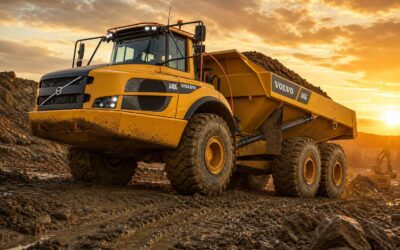
The articulation joint is the machine’s soul. It allows the front and rear chassis to twist independently, which keeps all six wheels planted on undulating terrain. This design is the difference between a truck that crawls and one that claws its way through a muddy crossroads.
I have watched a loaded unit navigate a 30 degree side slope where a rigid truck would have tipped. The hinge point transfers the load and absorbs the ground’s harsh feedback. On a haul road, this reduces the shock to the drivetrain and the operator. Since the rear module follows the front module’s tracks exactly, tyre scrub is minimized, and fuel is conserved.
Consider the layout of the power train. The engine and transmission sit in the front module, while the dump body rests on the rear. This split configuration distributes weight evenly between the axles. The pivot point also allows for a tighter turning radius, which is a critical feature when working in confined blast zones or on narrow forest roads. These machines are called dump trucks articulated for good reason, as the hinge defines their entire capability.
How Articulation Improves Maneuverability
An operator in Mpumalanga once told me she can place a fully loaded articulated hauler within a handspan of a guardrail on her first attempt. The articulation is why! In a corner, the pivot point changes the machine’s geometry completely. Dump trucks articulated at the joint turn inside their own frame, so the rear axle does not swing wide like a rigid truck’s would.
That predictable response becomes a daily advantage in tight spots:
- Reversing under a conveyor requires one clean approach, not a series of corrections.
- Passing another machine on a narrow bench needs less braking and juggling.
- Aligning the body for a shovel load takes fewer movements.
South African sites with tight access roads depend on this behaviour. Shorter turnaround distances move more material. Dump trucks articulated this way are easier to place precisely, and that precision shows up in the production numbers at the end of every shift.
Typical Job Site Applications
A South African job site is less a plan and more a negotiation. Articulated haulers exist to win that negotiation, moving payloads where rigid trucks sink, stall, or simply refuse. I have watched dump trucks articulated at the joint handle ground that would swallow a conventional chassis. The machine adapts to the site; the operator never waits for the ground to be remade.
Typical applications on local sites include:
– Load and carry cycles where the excavator and hauler share the same bench.
– Private haul roads that turn to mud after one afternoon storm.
– Sustainable mining operations where the route changes weekly as the pit advances.
– Rehabilitation projects that require reversing into tight dumping points.
The articulate joint turns uncertain conditions into routine work. That predictability is the real product.
Top Advantages for Off-Road Operations
Traction and Flotation in Soft Terrain
A heavy downpour can turn a rural South African gravel road into a bog, halting standard machinery. Dump trucks articulated for off-road duty solve this through flotation. Their wide, low-pressure tires spread the vehicle’s mass over a larger footprint, keeping the truck on top of soft ground instead of digging in.
Traction improves because the oscillating frame keeps all six wheels in contact with the terrain. On uneven tracks, a rigid truck will lift a wheel and lose grip. The articulated design allows the front and rear units to twist independently, maintaining pressure on every tire. This prevents wheel spin and reduces the risk of getting stuck.
Drivers operating dump trucks articulated in these environments notice a difference in cycle times. The truck maintains momentum, reducing the need for low-range crawling or repeated attempts at a climb. That momentum means less strain on the drivetrain and lower fuel consumption.
Stability on Slopes and Uneven Ground
Gravity turns unforgiving on a rain-slicked incline. A rigid frame shifts weight downhill and risks a sideways slide. Dump trucks articulated defeat that physics via a pivoting hitch that flexes with the land’s contour. The center of gravity stays low and central, even when the front wheels crest a ridge. Stability comes from engineering choices:
- The oscillating hitch decouples the front and rear units, so a dip under one axle does not lift the opposite corner.
- The wide track width resists lateral tipping on side slopes.
- The load sits forward over the drive axles, keeping the center of mass inside the wheelbase.
Operators feel a strange calm where a rigid machine rocks and shudders; the articulated unit simply follows the terrain. I have crossed the eroded dongas of the Highveld in these machines; the absence of lurching is eerie. Dump trucks articulated this way conform to the ground rather than resist it.
Lower Ground Pressure for Environmental Care
On the fragile soils of the Karoo or the waterlogged flats of Mpumalanga, a single pass with a rigid machine can shear the root mat and open erosion channels that persist for decades. Dump trucks articulated with oscillating hitches spread their working weight across a wider tyre footprint. The result is lower ground pressure, which directly translates to less soil compaction.
Roots survive. Pasture recovers. Drainage lines stay open. I have seen these differences on South African sites where environmental compliance is written into every mining permit and municipal contract.
The practical effects compound over a project lifecycle:
- Rigid trucks cut ruts that channel topsoil loss on the next rain.
- Articulated units leave a surface ready for rehabilitation without additional ripping or re-vegetation.
Dump trucks articulated this way cost less in environmental remediation, and they preserve the land that the next generation will farm or build on.
Payload Distribution and Center of Gravity
Load placement dictates how a machine behaves when the ground falls away beneath one wheel. On a rigid chassis, the centre of gravity is locked in position relative to the axles. Dump trucks articulated use an oscillating hitch to change that relationship. The rear frame follows the terrain while the front frame carries steering and drive forces, so payload weight spreads across the full tyre footprint instead of concentrating on a single corner.
Consider a loaded haul up a rutted incline in the Northern Cape. The rear wheels climb over a rock ledge while the front wheels remain on flat ground. A rigid truck lifts a front tyre and loses steering. An articulated unit keeps all six tyres planted because the centre of gravity shifts within safe limits as the frames pivot.
Operators gain two practical advantages:
1. Payload capacity remains available in rough terrain
2. Frame stress reduces because twisting forces stay at the articulation joint
I have seen dump trucks articulated carry full loads across the Kalahari where rigid machines must derate. The centre of gravity works with the terrain instead of against it.
Productivity in Wet and Muddy Conditions
Wet season haul roads in Mpumalanga or Limpopo turn to slurry within hours. Dump trucks articulated handle this differently from rigid machines because the oscillating hitch sheds mud and debris instead of packing it into the frame. The joint stays clear, so cycle times hold steady even when the surface loses cohesion.
Dump trucks articulated maintain productivity in these conditions through:
- The articulation point self-cleans during normal steering cycles
- Mud and slurry shed quickly from the hitch, preventing weight build-up
- Sealed pivot bearings resisting abrasive fines
I have watched these machines move loads across saturated clay sites where rigid trucks simply sink. Rainfall does not force a full stop. Loads keep moving because the machine’s geometry works around the obstacle. Waterlogged sites see fewer lost cycles, and that translates directly to hourly output.
Choosing the Right Articulated Truck
Payload Capacity and Engine Power
A machine that strains against its own limits every shift is a costly gamble. In South Africa’s mining and earthworks sectors, selecting the right dump trucks articulated for your material density and haul road profile matters more than the sticker price. Payload capacity determines how many tonnes you carry per cycle, but engine power dictates how efficiently you climb ramps and sustain speed. These dump trucks articulated demand a nuanced evaluation, not a simple brochure comparison.
The interplay between these two specs creates a balance. Over specifying power burns fuel without productivity gains. Under powering a loaded body causes gear hunting and brake wear.
Consider these factors before purchase:
- Rolling resistance on soft or rutted haul roads
- Altitude deration above 1,500 metres
- Transmission ratios matched to gradients
I prefer to calculate effective payload at a 1.5 safety margin rather than relying on nominal figures.
Articulation and Oscillation Joints
Choosing dump trucks articulated with the right articulation and oscillation joints is a matter of geometry, not bravado. The oscillation joint lets your front axle climb a rock while the rear tyres stay planted. A joint that seizes compromises traction and loads the driveline unevenly. Inspect the pivot bearing design. Look for sealed pins, hardened bushings, and grease points you can reach without dismantling the belly guards.
Maintenance intervals matter too. Some manufacturers offer extended lubrication cycles, which sounds great until you see the replacement cost. Consider the oscillation angle specification. Too little travel and you lose ground contact on undulating ramps. Too much can stress the driveline. Get the balance right for your haul road profile.
Tire Options and Tread Patterns
Tyre costs can consume up to 30 percent of the operating budget on a fleet of dump trucks articulated. South African haul roads vary from sharp, angular rock to deep, plastic mud, and each demands a different tread approach.
For hard rock applications, specify deep, heat resistant lugs and reinforced sidewalls to resist cuts and punctures. For wet, muddy sites, a self cleaning lug pattern with wider spacing prevents clogging and maintains traction. Radial casings run cooler and extend tyre life over long hauls, while bias constructions absorb the stress of rough loading areas.
The variables to weigh with your tyre supplier include:
- Lug depth and spacing for your rock type
- Casing construction against rolling distance and payload
- Sidewall strength for haul road condition
Match those to your site conditions and your dump trucks articulated will deliver more kilometres with fewer failures.
Operator Comfort and Safety Features
Operators spend up to twelve hours a day inside a cab that vibrates, roars, and collects dust. That reality shapes productivity more than any drivetrain spec. On South African sites, where heat and fatigue compound quickly, the cabin is critical for alert operation and preventing error.
The modern cab on dump trucks articulated prioritises ergonomic geometry. Joystick controls reduce arm strain; air suspension seats dampen jolts that cause spinal stress over 10 hour shifts. Visibility systems, 360 degree cameras and proximity sensors, address blind spots on narrow haul roads.
- Rollover and falling object protection, certified to regional standards
- Automatic climate control to manage Highveld heat and dust ingress
- Noise dampening panels to keep cabin decibel levels below 80 dB
These features drive operator retention and fewer incidents. A comfortable operator maintains cycle times. The difference shows in reports and incident logs on fleets of dump trucks articulated.
Integrated Telematics and Automation
Telematics has turned the modern fleet into a data factory, and I am here for the numbers! When choosing integrated systems for dump trucks articulated, the priority is not flashy dashboards but actionable telemetry. Fuel burn, payload counts, torque output, and cycle times tell a story that no operator report can match. Automation layers on top of this, handling repetitive tasks like braking and gear selection so the human in the cab focuses on hazards.
- Real time diagnostics that flag component wear before failure
- Geo fencing to keep equipment on designated haul roads
- Payload monitoring against the manufacturer’s rated capacity
The right system pays for itself through reduced idle time and fewer unscheduled breakdowns. But integration matters more than the hardware. South African fleets running dump trucks articulated in remote areas need telematics that cope with poor network coverage, buffering data for later upload. If the system cannot operate offline, it is a liability. Automated functions should complement the operator, not override their judgement on tricky descents.
Aftermarket Support and Warranty
In South Africa, a warranty is a paper promise without an aftermarket network that reaches your site. The first document I request for any dump trucks articulated purchase is the service coverage map, not the brochure!
When evaluating dump trucks articulated, the parts pipeline is the true spec. Some manufacturers stock parts in only one provincial depot, a liability for Northern Cape operations. The availability of articulation joint bearings and final drive seals within 500 kilometers is critical. Field service vans with trained technicians matter more than call centers. A 12 month warranty covers the machine, yet the real test is how quickly a faulty hydraulic cylinder gets replaced when your fleet is stuck.
The fine print often excludes wear items. The best aftermarket teams offer remanufactured components. For remote South African sites, that is the difference between a minor delay and a project disaster.
Managing Operating and Maintenance Costs
Fuel Consumption Optimization
Fuel is the largest single operating expense in any earthmoving fleet. In South Africa’s harsh haul conditions, the difference between profit and loss often rests on throttle discipline and route planning. I have seen fleets of dump trucks articulated to the same specification return wildly different consumption figures, purely because one site manager understood the cost of every litre.
Preventive maintenance directly affects fuel efficiency. Hydraulic oil viscosity, tyre pressure, and driveline alignment all influence the bottom line. A machine that labours uphill burns more, and a machine that operates beyond its service interval burns out.
The best operations treat these costs as one equation, not separate line items.
Tire Wear Reduction Strategies
Tires sit beside fuel in that same cost equation. On South African haul roads, a single sharp rock can end a R80,000 tyre’s life in seconds. The accountants see the replacement invoice. The site manager should see the cause.
Routine inspections catch small problems before they multiply. Sidewall cuts, tread separation, and heat buildup all signal trouble prior to failure. Operators who report vibrations early save both the suspension and the tires. Haul road maintenance is tire management. A grader pass costs a fraction of one replacement.
- Running underinflated tires increases flex and heat.
- Overloading amplifies every impact.
- Ignoring alignment scrubs tread off in weeks.
Fleets of dump trucks articulated to the same specification still return double the tire life between sites. The difference is discipline. Check pressures daily. Match tires across axles. Repair cuts before they grow. Small actions, repeated hourly, compound into meaningful savings.
Scheduled Maintenance and Downtime
In South Africa, downtime is the invisible component of cost. A machine parked for a scheduled service is a planned inconvenience. A machine parked for an unexpected failure is a crisis. I have seen fleets of dump trucks articulated to the same specification, yet one returns 90 percent availability while another limps to 70 percent. The difference is not luck.
Scheduled maintenance builds a rhythm. It gives the maintenance planner foresight. It gives the operator confidence. The alternative is a reactive scramble for parts, technicians, and excuses.
- Inspect the articulation joint for wear at every service.
- Change hydraulic oil on time, not when the pump complains.
- Replace filters before the pressure drop tells you to.
For any fleet of dump trucks articulated, that rhythm keeps wheels turning. Downtime costs more than the repair invoice. It costs production, morale, and trust. Manage the schedule, and the schedule will not manage you.
Articulated Versus Rigid Frame Trucks
Terrain and Weather Limitations
In South Africa’s variable climate, terrain often dictates the winner before the engine even starts. Rigid frame trucks perform admirably on hard, dry haul roads, but they lose composure when a storm turns the surface to slick clay. Dump trucks articulated, meanwhile, rely on their oscillation joints to keep tires grounded, yet that same flexibility becomes a liability on sharp, rocky inclines where a rigid chassis offers a more predictable stance.
Weather compounds these limitations. Heavy rain can saturate a site until both machine types bog down, though the articulated unit’s all wheel drive extends your window for work. Deep mud is a different matter; it can clog the articulation point and freeze the joint in cold conditions.
- Rigid frames struggle on wet, crowned slopes
- Articulated units risk tipping when one tire locks in thick slurry
Ultimately, dump trucks articulated demand a careful reading of each shift’s conditions, not a blanket confidence in their design.
Haul Distance and Cycle Time Factors
A rigid truck’s top speed means nothing when the haul road fades into switchbacks. Over long, winding distances, dump trucks articulated hold their own because drivers keep momentum through corners that force rigid frames to brake hard. That cycle time edge grows with every extra kilometre.
At a typical South African operation, the shift figures reveal the real difference:
- Load time at the face: three minutes
- Haul distance: 4.5 kilometres one way
- Elevation gain: 60 metres across the route
Each minute lost to a slippery grade or a cautious descent adds straight onto the total cycle. Rigid trucks claw time back on smooth, straight roads, but they surrender it when the route demands care. Dump trucks articulated post slower top speeds on paper, yet their steadier pace over broken ground often finishes the shift ahead. The route profile decides the winner, not the spec sheet.
Capital and Operating Expense Comparison
Somewhere, a procurement manager punches R700,000 extra into a spreadsheet for a rigid frame truck and calls it value. The arithmetic says otherwise. That rigid machine moves more tonnes per litre on a perfect highway, but the moment that highway turns into a rock-strewn paddock, the cost curve inverts. Dump trucks articulated carry a higher purchase price, no argument there. Yet the operating expense story reads differently once you factor in what a rigid frame actually eats through.
– Independent front suspension repairs, constant on rough sites
– Driveline shock loads from wheel hop and hard landings
– Tyre sidewall failures from cutting through soft material
The articulated unit spreads that punishment across its chassis, which means fewer R400,000 transmission rebuilds and less time parked in the workshop. For a South African operation running 45-tonne payloads over veld that has never seen a grader, that R2 per tonne difference in operating cost disappears entirely. The capital expense might sting on day one, but the maintenance ledger gets the last laugh.
Selecting the Best Fit for Your Fleet
Choosing between rigid and articulated machines requires honesty about your site conditions. A rigid frame rewards a well-graded haul road with speed and efficiency. The moment terrain turns ugly, dump trucks articulated show their value. The selection process reduces to route permanence, material behaviour, and operator confidence. Consider three factors before you commit.
- Route condition during the wettest month of the year
- Material density and behaviour under load
- Operator familiarity with six-wheel drive and oscillation
Dump trucks articulated absorb punishment that would damage a rigid frame’s driveline. Rigid machines transfer that punishment to the operator and the components. The right choice becomes clear when you evaluate the site at its worst, not its best. The ground decides. The spec sheet only argues.

0 Comments