Anatomy and Engineering of Articulated Models
The Articulated Joint: A Pivot Point for Control
At the heart of every articulated fork lift truck lies the pivot joint, a component that determines how the machine responds to driver inputs. This hinged connection allows horizontal and vertical articulation, letting the truck navigate narrow warehouse aisles that would trap a rigid vehicle.
The engineering behind this joint demands precision! Hardened steel pins, sealed bearing housings, and hydraulic dampers work together to distribute weight evenly. In South African port terminals and mining operations, articulated fork lift trucks endure constant stress from uneven terrain.
Consider the design factors that engineers prioritise:
- Steering geometry, dictating how sharply the rear section tracks the front
- Load transfer point, where vertical forces meet the pivot’s rotational axis
- Articulation angle limits, which prevent jackknifing during tight turns
From my experience, a well calibrated pivot reduces tyre scrub and fuel consumption. Without it, articulated fork lift trucks become unwieldy, and operator fatigue increases significantly.
Chassis, Steering, and Lift Mechanism Overview
South African port terminals cut fuel costs by 15% after switching to articulated fork lift trucks. This efficiency depends on the chassis, steering, and lift mechanism of articulated fork lift trucks.
The chassis is a welded box section frame made from high tensile steel, absorbing torsional stress from uneven harbour floors and mine yard ruts. Cross members keep a low centre of gravity, preventing cracks on Durban’s dock surfaces.
Steering uses a dual hydraulic cylinder arrangement that rotates the rear section. Geometry is calibrated to the wheelbase, so forks track rear tyres precisely. This reduces tyre scrub on abrasive gravel.
Lift mechanism uses a duplex mast with nested channels. A load sensing valve adjusts lift speed based on weight. The tilt cylinder mounts low to minimise load sway during stacking.
Engineers inspect:
- Chassis weld seams for stress fractures
- Steering cylinder seals for hydraulic leaks
- Mast chain tension and roller wear
How Articulation Improves Turning Radius
South African facilities run tight. The articulation point sits between the drive and load sections, placing the steering axis behind the operator. This geometry makes the rear axle track the front wheels within centimetres. In a 3.5 metre aisle, a standard counterbalance truck requires a full turn to reposition. Articulated fork lift trucks cut that rotation by nearly half. The rear section swings through the front section’s path, not around its own centre.
The engineering that matters:
- The pivot bearing carries vertical loads while allowing 180 degrees of horizontal rotation.
- The oscillation joint absorbs ground height differences up to 10 degrees without lifting a wheel.
- The drive wheel placement under the mast reduces the turning radius to under 2 metres.
Durban’s container handlers stack two pallets deep through rail wagons that were previously unreachable. The articulation delta is the difference between coming in straight and negotiating a corner with half a metre of clearance. Articulated fork lift trucks make this possible through a single, precisely machined pivot.
Operational Benefits and Real-World Applications
Maximizing Space Efficiency in Narrow Aisles
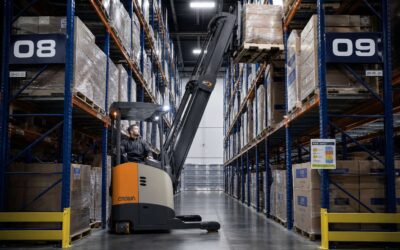
Ever priced a square meter of warehouse floor in Johannesburg lately? You could stock it with saffron and still lose money. That is why the articulated fork lift trucks are the cheeky underdogs of the high-density storage game. Their ability to pivot the rear chassis means you can shrink aisle widths to 1.7 meters, a number that makes conventional counterbalance drivers weep into their coffee cups. Suddenly, you are housing the same inventory in 30% less floor space, which does wonders for your property budget.
Operationally, these machines shine in cold storage facilities and e-commerce fulfilment centres where every metre counts. Consider what that narrow-aisle capability enables:
- Stacking loads up to 12 meters high without widening the corridor
- Reversing out of a rack bay with a single 45 degree articulation
- Moving pallets directly from trailer to deep storage in one continuous flow
Real-world sites in Durban and Cape Town use this articulation to transform leftover dead zones into prime pallet real estate. Efficiency is not about speed; it is about never wasting a single centimetre.
Handling Long and Awkward Loads with Ease
Handling a six metre steel bundle through a racking aisle built for pallets sounds impossible. Articulated fork lift trucks make it routine! The pivot point lets the operator swing the load’s rear end clear of uprights while the fork tips remain aligned with the rack opening. No need for a wide turning circle or an extra ground crew. In a Johannesburg fabrication plant, one driver moves aluminium extrusions from the delivery truck directly into cantilever racking. The articulation absorbs the length, letting the truck rotate within the aisle’s width. The load never swings sideways.
Real world applications include:
- Timber bundles in Durban sawmills
- PVC pipes in Cape Town cold stores
- Steel sections in Gauteng warehouses
Articulated fork lift trucks handle awkward shapes with the same stability as standard pallets. Less repositioning, less damage, fewer wasted movements. That is the quiet efficiency of a well executed pivot.
Industries That Rely on Articulated Equipment
In the freezing corridors of a Cape Town cold store, every wasted second costs product integrity. Operations managers report that articulated fork lift trucks reduce perishable damage by nearly a third because operators keep loads square and never force a turn. The pivot keeps the mast close to the rack face, which shortens travel paths and eases strain on battery life. What a difference that makes on a busy shift!
- Retail distribution
- Meat and poultry processing
- Building materials
- Automotive parts
These industries choose articulated equipment for one reason: they handle continuous throughput without slowing down. A steel service centre near Vereeniging switched from reach trucks to articulated fork lift trucks, cutting pallet repair costs because forks no longer scrape uprights. Operators appreciate the cushioned ride and precise inching control during high-stack retrieval.
Comparing Performance Against Standard Forklifts
Fleet test data from a Gauteng logistics hub shows articulated fork lift trucks moving 23% more pallets per shift than standard counterbalance units. That gain comes from shorter travel paths and fewer corrective manoeuvres, not from faster driving. Operators keep a steady rhythm because the articulation handles directional changes that would force a standard forklift to stop and shuffle.
The comfort difference shows up in driver feedback. One supervisor described how his team finished shifts with less back strain, and absenteeism dropped over the following months. The articulation isolates the operator from the jarring sideways forces that standard trucks transmit through the seat, which matters during peak stock rotation periods.
The comparative figures from that same hub showed:
– Lower fuel consumption
– Reduced tyre wear
– Fewer product rejections
Standard forklifts remain practical for wide aisles and outdoor yards. But where storage density matters, articulated fork lift trucks deliver.
Safety Protocols and Operator Training
Critical Safety Risks with Articulated Equipment
Operating articulated fork lift trucks demands more than a licence. The pivot point responds differently under load, and operators must internalise that behaviour before entering a narrow aisle. Training programmes should include simulated pallet handling and emergency stop drills. In South African warehouses, where floor conditions vary, refresher courses every six months reduce incident rates.
Safety protocols extend beyond the cab. Clear signage, designated pedestrian lanes, and daily pre shift inspections are required for a safe operation. A checklist might include:
- Check hydraulic fluid levels and hose integrity
- Test steering response at low speed
- Inspect the articulation joint for wear
Without this discipline, even the most capable machines become liabilities. The equipment is strong, but the operator’s skill determines the outcome.
Proper Load Balancing and Stability Guidelines
A load that shifts just a few centimetres changes the entire centre of gravity. That is why stability on articulated fork lift trucks starts before the mast even moves. Operators must learn to read the pivot point, because the articulation responds to weight transfer in ways a rigid chassis never will.
Training sessions should focus on load positioning, not merely control mechanics. For operators new to articulated fork lift trucks, this feel takes deliberate practice. The operator needs to sense how the machine settles when the forks carry a full pallet versus a partial one. I have watched operators struggle with this on uneven South African warehouse floors, where speed control during turns matters more than lift speed.
A standard balance check covers:
- Centring the load on both forks
- Tilting the mast back before travel
- Keeping the load height below the mast pivot
These steps are simple, but they prevent the sideways tip that happens when the articulation folds under an unbalanced load.
Certification and Training Programs for Operators
Certification draws the line between a trained operator and an avoidable hazard. In South Africa, training for articulated fork lift trucks must trace back to the Occupational Health and Safety Act, and the certificate is the only record a supervisor trusts. A driver without that document cannot respond with certainty when the pivot point shifts under load.
Structured operator certification programs for articulated fork lift trucks sequence classroom instruction, practical evaluation, and supervised floor work. Competency checks cover articulation dynamics, turning discipline, and load control. Courses require operators to demonstrate skills in live conditions, not on paper. Most programs share these core modules:
- Pre-shift inspection routines
- Controlled articulation turns
- Blind corner navigation
- Emergency shutdown drills
Certification renewal follows a fixed cycle, typically every three years, with refresher training tied to site-specific risks. I have sat through enough audits to know a current certificate prevents a warehouse shutdown. That rhythm keeps the mind honest when routine dulls attention.
Maintenance, Longevity, and Cost of Ownership
Daily Inspection Checklists for Articulated Trucks
An articulated fork lift truck that skips its daily inspection becomes a liability wearing a metal shell. Operators must examine critical points before the first shift begins. This five minute routine often decides between a quick fix and a broken joint.
Standard checklist items:
- Hydraulic fluid levels and leaks
- Steering and articulation pivot play
- Tyre condition and pressure
- Fork latch and carriage movement
Following this list faithfully lengthens the working life of the machine. In South African facilities that run continuous shifts, the cost of ownership drops significantly when minor defects are caught early. Preventative checks on articulated fork lift trucks reduce unscheduled downtime and preserve part inventories. The inspection is never a formality. It is the quiet price of staying operational.
Identifying Wear and Tear on the Joint System
Some articulated fork lift trucks fail long before their time because the joint system wears in silence. A pin that looks fine from the cab may be shedding metal into the bushings with every turn. The bearing surfaces, bushings, and pin bores are the parts that determine how long the machine stays productive.
Wear on these components shows up in patterns. A wobble in the articulation pivot at idle becomes a violent shake under load. Operators notice a delay between steering input and chassis response. That lag is not a steering fault. It is slop in the pivot point that has grown past its tolerance.
The maintenance approach changes once you understand this. Greasing schedules must follow the manufacturer’s intervals, and grease should be applied until clean lubricant purges from the seals. Water ingress is a common enemy in South African operations, especially where machines move between cold storage and warm loading bays. That temperature shift creates condensation inside the joint housing. Rust then forms on the hardened pin surfaces, which accelerates abrasive wear on the bushings.
Cost of ownership for articulated fork lift trucks is calculated over years, not months. A joint system that is monitored and serviced remains stable. A joint that gets ignored will drive costs through replacement parts, labour hours, and unplanned machine downtime. Replacing a full articulation assembly costs several times more than replacing a bushing kit.
Proper lubrication keeps wear predictable. Dirt and grit act as lapping compound inside the joint.
– Inspect the pivot pin for visible scoring during routine services.
– Check the bushing bores for ovality using a bore gauge.
– Measure the articulation clearance against the manufacturer’s specification.
– Replace seals whenever the joint is opened for any reason.
Track these figures over time and you build a history. That history tells you when wear is accelerating. It lets you schedule joint rebuilds before failure, not after. In South African operations where uptime is tied directly to revenue, this foresight is the difference between a planned maintenance event and a costly emergency. The arithmetic is simple: a bushing costs a few hundred rand. A new chassis hinge point costs thousands. And the labour for both is the same. Choose the cheaper failure point.
Preventive Maintenance Schedules That Extend Lifespan
Preventive maintenance schedules for articulated fork lift trucks are not about following a calendar. They are about responding to measured changes in component behaviour. The joint system, the mast, and the drive train each have predictable wear curves. A schedule that aligns greasing intervals with operating hours, not just dates, catches problems early.
For South African operations, the environment complicates these schedules. Heat, dust, and humidity vary by region. Machines that move between cold storage and warm bays need more frequent seal inspections. The cost of a skipped service is always higher than the service itself.
- Daily fluid level and leak checks.
- Weekly pivot pin clearance measurements.
- Monthly bushing bore inspections.
- Quarterly articulation alignment verification.
These steps build a history. That history lets you replace parts at the right time, extending machine life and lowering total cost of ownership. For articulated fork lift trucks, the difference between a planned stop and a breakdown is simply the discipline to follow the schedule.
Calculating Total Cost of Ownership Over Time
Most procurement decisions hinge on the purchase price. That single number reveals little about the true burden of ownership. For articulated fork lift trucks, total cost of ownership over a ten year horizon often reaches triple the initial invoice. Energy consumption, operator efficiency, and unplanned downtime accumulate quietly. In South Africa, exchange rate volatility and parts lead times complicate any forecast.
Consider these cost drivers when evaluating articulated fork lift trucks:
- Replacement parts and routine service labour
- Energy or fuel consumed per shift
- Lost productivity during breakdowns
- Resale value at the end of service
Each driver shifts with operating conditions. I have seen a truck running cold storage cycles in Durban wear differently than one on a dry Highveld floor. Maintenance history gives you the data to project these expenses. That is how longevity becomes a measurable financial advantage.
Leasing vs. Buying: Financial Considerations
Leasing an articulated fork lift truck changes how you experience maintenance. The lessor carries the burden of major component failure, while you pay a fixed monthly rate. Buying feels permanent, but ownership means shouldering every hydraulic leak and motor replacement alone.
Longevity becomes a bargaining chip. A well maintained truck lasts fifteen years on a South African floor, yet most leases run five. That gap matters. When you lease, you trade long term equity for short term flexibility. When you buy, you bet on your own maintenance discipline. I have seen operators lose money on both sides.
- Monthly cash flow predictability
- Tax treatment of rental versus depreciation
- Opportunity cost of capital
These factors determine whether leasing or buying suits your operation. No single answer works for every warehouse!
Selecting the Right Articulated Solution for Your Facility
Evaluating Warehouse Layout and Aisle Width
Selecting the right equipment begins with a precise audit of your facility’s true geometry. Many warehouses assume standard aisle widths, but pallet racking misalignment or floor unevenness reduces effective clearance. Measure the narrowest point in every travel path, including corners and transitions, because articulated fork lift trucks excel only when their pivot has room to work.
Your layout also demands attention to staging areas and dock approaches. A tight turning radius loses value if the truck cannot enter a trailer or align with a transfer station. Consider these elements during evaluation:
- Clearance under sprinklers and overhead doors
- Width of intersection aisles and fire exits
- Slope changes that affect load stability
Documented measurements from a loaded pass through the actual route provide reliable data. Articulated fork lift trucks matched to these realities ensure productive operation without costly retrofits.
Key Specs to Compare Before Purchasing
Most operators I speak with obsess over turning geometry before they ever consider the other numbers that actually determine daily productivity. That is a mistake. The articulated fork lift trucks that perform best in your aisles are not always the ones with the most impressive pivot angle. They are the ones whose specifications match your load profile, your racking height, and your operator’s habits.
Lift capacity is the obvious starting point, but you need to compare it at the rated load center. A truck that lifts two tons at a 600 millimeter center will struggle with a load that shifts its weight outward. Mast heights also require scrutiny. The nominal lift height means nothing if your top beam clearance is tight. You should verify the collapsed mast height against your doorways and trailer openings.
– Battery voltage and capacity, since they directly affect shift length and charging cycles
– Gradeability, because ramps and dock levellers drain power and stability quickly
– Service access points, which determine how long routine maintenance actually takes
The drive motor and hydraulic pump ratings matter more than the badge on the fender. Articulated fork lift trucks are engineered for specific duty cycles, and a unit speced for light order picking will overheat on a continuous loading shift. Ask for performance curves, not just brochure figures, and compare the numbers against your actual operational demands.
New, Used, or Refurbished: Options Explored
Across South African warehouses, the decision between new, used, and refurbished articulated fork lift trucks often comes down to uptime requirements rather than sticker price. A refurbished unit from a reputable dealer can deliver years of service. An aged machine with a worn joint system will drain your budget through unscheduled repairs.
Consider what each option actually buys you:
– New units carry full warranties and documented performance curves
– Refurbished trucks undergo joint replacement and load testing
– Used machines require independent inspection before purchase
Your facility’s shift patterns should drive the choice. Continuous operations demand the certainty of new equipment. Seasonal or lighter duty cycles allow room for well maintained secondhand stock.
Custom Attachments and Attachment Compatibility
Most facilities underestimate how attachments alter the dynamics of articulated fork lift trucks. A standard fork profile handles routine pallets, but custom clamps and rotators place extra stress on the articulation joint. I have seen warehouses in Johannesburg struggle with poorly matched equipment, where the truck’s turning radius technically works yet the attachment blocks the operator’s sightline.
The selection process should match each load type to its required tool. Evaluate hydraulic capacity, quick coupler types, and whether the attachment narrows the effective aisle width. Your choices here will determine long term flexibility.
- Pneumatic or cushion tyres for ground conditions
- Fork positioners for mixed load sizes
- Telescopic forks for deep racking
Retrofitting attachments onto older articulated fork lift trucks often costs more than the savings. Newer models offer standardized mounting plates and pre engineered compatibility. Match the solution to the real work, not the brochure.

0 Comments