Primary Applications Across Heavy Industries
Construction and Earthmoving Projects
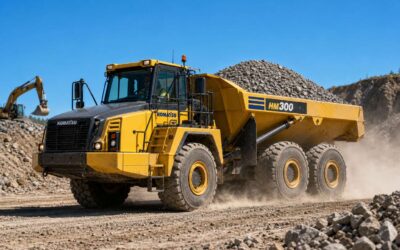
In South Africa, the articulated trucks cat fleet moves more overburden than any other machine class. These vehicles thrive where rigid trucks hesitate, particularly on soft ground and steep gradients. Construction projects rely on them for bulk earthworks, while opencast mines depend on their all-wheel drive traction for daily production schedules.
- Hauling spoil from excavation sites to dumping grounds
- Transporting aggregate for road base layers
- Moving tailings or waste material in mining operations
Their oscillating chassis design keeps the payload stable across uneven terrain. I have watched them tackle 15% inclines without losing momentum! That adaptability explains why articulated trucks cat units appear on nearly every major dam, highway, and quarry project across the region.
Mining and Heavy Extraction Operations
In South Africa’s deepest mines, the articulated trucks cat fleet handles a brutal reality: rock that never stays put. Roughly 60% of underground development systems depend on these machines to clear blasted material from the face before the next drill crew moves in. That is not a luxury, it is a daily target.
Load haulage in narrow tunnels puts every component to the test. The oscillating chassis twists over broken footing while the all wheel drive pack pulls through mud and shattered reef. Shift supervisors call them the mules of the decline, because they carry ore out of spaces where rigid haulers simply cannot fit.
- High density ore extraction from stopes and crosscuts
- Feeding conveyor feed bunkers between production levels
- Recovery of mineralised waste from rock passes
I have stood at a tipping exit while an articulated trucks cat backed its box against the crusher lip, six wheels floating over the edge without drama. In this industry, that mechanical patience is worth more than raw speed. They simply keep going, load after load, until the shift is done.
Agricultural and Land Development Tasks
Three hundred and twelve hectares of winter wheat depend on a single articulated trucks cat during planting season in the Free State. That is the arithmetic of survival when the rains are late and the soil turns to sandstone. The machine does not simply drag a scraper, it becomes the anchor of the entire operation, moving topsoil from where it has gathered in hollows to where the seed must find moisture. I have watched an articulated trucks cat work a slope that would stall a conventional tractor, its oscillating frame keeping all six wheels in contact with the undulating ground where a rigid chassis would have lifted a wheel and lost traction entirely.
The land development contractor knows this machine as the quiet worker that transforms idle bushveld into productive pasture. It cuts access roads through rocky outcrops, clears fallow fields of stubborn stumps, and reshapes the drainage lines that flood after summer storms. The versatility comes from the articulation joint, which allows the machine to turn within its own length, a blessing in confined spaces like citrus orchards where every row is measured and precious.
– Clearing dense brush and alien vegetation from new grazing land
– Constructing farm dams and water catchment basins
– Maintaining internal gravel roads during the wet season
Those who run these machines speak of their patience. An articulated trucks cat does not hurry through a job, it simply refuses to stop. The operator in the cab reads the ground ahead, adjusts the blade, and lets the machine’s weight do the work. In a country where the land itself is the economy, that reliability translates directly into yield, and yield into survival.
Quarry and Aggregate Production Sites
At a quarry face, the articulated trucks cat does its most demanding work in short, punishing hauls. Blasted rock does not move itself, and the machine shuttles between the muck pile and the primary crusher with a patience that borders on the philosophical. The articulation joint allows the machine to turn around on a bench barely wider than its own length, a manoeuvre that would leave a rigid truck reversing for minutes.
The aggregate producer values this machine for its ability to absorb the punishment of shot rock. The oscillating frame keeps the tyres planted on uneven quarry floors. Fully loaded, the articulated trucks cat climbs the ramp to the crusher without drama.
- Feeding primary crushers from the blast face
- Moving overburden to spoil dumps
- Rehandling stockpiles after screening
The quarry manager watches the cycle times, and the machine delivers. Each load arrives on schedule, and the crusher never waits.
Road, Bridge, and Infrastructure Builds
Nearly R40 billion in road and infrastructure spending is promised over the next three years, but the asphalt does not lay itself. The articulated trucks cat carries the burden of these builds, moving material where fixed plant and rigid haulers cannot follow. On a highway cut through the koppies, the ground is uneven, the space is tight, and the margins for error are measured in millimetres.
These machines work the intricate dance between the piling rigs and the paving crews. They bring aggregate for the base layers, cart away the spoil from the culvert excavations, and shift the fill for the bridge approaches. The articulation joint, which seems such a simple engineering solution, is the difference between a stalled project and a daily production quota met. When the rains come and the access road turns to a slick, red mud, it is the articulated trucks cat that still delivers its load.
– Feeding the crushing plant for the sub-base and wearing course
– Hauling asphalt millings from the road surface during rehabilitation
– Moving dirty fill from the bridge abutments to the designated disposal area
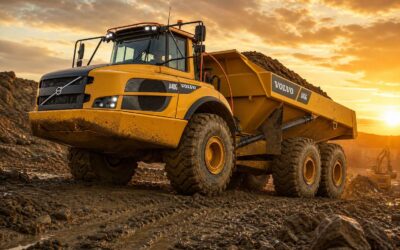
A rigid truck would bog down, or would wait for the ground to dry. Our machines do not have that luxury. On a new alignment near Polokwane, the machine had to cross a freshly graded section where the moisture content was marginal at best. The oscillating rear frame kept the tyres in contact with the slick surface, and the machine clawed its way across without losing momentum. The load arrived. The grader did not stop. The project schedule held. That is the true value of this equipment, it is the unglamorous, reliable muscle that keeps the heavy civil work alive.
Key Design Features and Performance Capabilities
Hydraulic Articulating Joint and Steering Geometry
A 45-degree pivot isn’t just a number. For articulated trucks cat, that hydraulic articulating joint dictates whether a driver clears a tight kopje or stalls in the mud. The steering geometry here does more than turn wheels; it shifts the chassis line, keeping the rear axle tracking the front through soft ground and narrow haul roads.
Performance comes down to three things:
– Articulation angle: up to 45 degrees for sharp turning
– Oscillation: allows the frame to flex independently over uneven terrain
– Steering cylinders: mounted high to avoid debris damage
These features cut turnaround time and tyre scrub. On a tough Western Cape site, that translates to fewer passes and less fuel burn. The joint itself uses hardened pins and sealed bearings, so downtime stays low even in abrasive dust. It is the kind of engineering that lets operators push harder without fighting the machine.
Payload Capacity, Tipping Loads, and Gross Vehicle Weight
Imagine a machine that carries the weight of a small mountain yet moves with the deliberation of a careful giant. On South African sites, the true measure of an articulated trucks cat is not just its engine note, but the raw physics of its load. The payload capacity dictates the economics of every cycle. Operators need to know precisely how many tonnes they can shift per hour to keep the fleet profitable.
The engineering behind this beast ensures the payload is not merely a number, but a promise. A key factor is the ratio between payload capacity and the Gross Vehicle Weight (GVW). A well-designed articulated trucks cat will have a low tare weight, meaning the machine carries more material and less dead steel. This directly influences fuel efficiency and tyre life, which are critical cost centres for any operation in the Western Cape or the Highveld.
Tipping loads are another critical specification that separates the competent from the struggling. The tipping load is the point at which the rear axle begins to lift, signifying the limit of stability. For an articulated trucks cat, this figure is usually higher than the payload, providing a safety margin for uneven loading and slope operations. A generous safety margin between the rated payload and the tipping load offers the operator confidence, particularly when working on soft ground or adverse cambers.
However, the GVW is the ultimate deciding factor for infrastructure. It determines which bridges the unit can cross and which haul roads can support it. Balancing these three figures is a fine art.
Here is how these factors interlock for productivity:
– Payload capacity defines the production ceiling for the shift.
– Tipping load provides the stability buffer for safety.
– GVW dictates the operational footprint and legal compliance on public roads.
When these elements are aligned, the machine becomes a reliable workhorse. It is not just about carrying weight; it is about delivering consistent, safe, and efficient cycles. The integration of these capacities means the chassis and suspension are tuned specifically to handle the stresses of the load. This holistic design ensures that the power from the engine is translated into forward momentum, not wasted energy or premature component wear.
All-Wheel Drive Systems and Suspension Travel
The Northern Cape’s haul roads punish machines with short suspension travel. An articulated trucks cat with long wheel travel and a tuned all-wheel drive system keeps every tyre pressed into the dirt. This is not only about operator comfort. It is about continuous traction. On soft or broken ground, wheels lift, and without travel they lose contact. The resulting shock loads stress the chassis and slow the cycle.
- All-wheel drive systems distribute torque evenly across axles, reducing wheel spin on gradients.
- Long suspension travel absorbs washboard surfaces, keeping material in the body.
The articulated trucks cat maintains speed and stability because the drivetrain and suspension work as one system. That combination lowers vibration, protects components and shortens cycle times on demanding Western Cape sites.
Engine Power, Torque Management, and Gradeability
On a 12% gradient, the articulated trucks cat does not hesitate. The engine delivers peak torque low in the rev range, where it matters most. Raw horsepower matters less than how the powertrain converts force into forward motion. Torque management systems continuously adjust output to each axle, preventing wheel slip on loose rock or wet clay. The result is a machine that climbs steep ramps with controlled, steady momentum.
Gradeability depends on this precise balance. A Cat articulated truck handles sustained slopes that stall lesser machines. The transmission holds the ideal gear, while the engine’s torque curve provides reserve power for sudden obstacles. Operators feel the difference as confident, predictable acceleration!
- Peak torque available from 1,200 rpm
- Automatic torque limiting to protect driveline components
- Grade-specific gear ratios for optimal climb performance
This engineering ensures the articulated trucks cat remains productive on the steepest Western Cape haul roads.
Operator Cab Comfort, Ergonomics, and Visibility Enhancements
Some operators spend ten hours a day in a cab that either makes the shift bearable, or grinds them down by lunch. On the articulated trucks cat, the designers focused on the human element. The cab sits on four rubber mounts, isolating the body from the frame’s twisting forces. The isolation cuts the constant vibration that causes fatigue on long hauls.
Visibility determines safety on a busy site. The sloping hood lines allow you to see the ground directly in front of the tires, which is critical when reversing onto a tip edge. The large glass area and narrow pillars swallow the blind spots that plague older machines. Every mirror has a specific purpose, and the rearview camera offers a clear sightline to the trailer’s tail.
– Wide-angle mirrors that eliminate the classic “B-pillar” obstruction
– A heated windscreen that clears condensation quickly in Highveld winters
– Adjustable steering column with tilt and telescope functions
– A multi-adjustable air seat with lumbar support for sustained comfort
That air seat matters more than it seems. It reacts to the terrain automatically, so your lower back doesn’t absorb every bump from the haul road. The controls fall into a logical pattern. Your left hand manages direction, while the right operates the hoist and body functions without you reaching across the cabin. The display screen is anti-glare and angled away from direct sunlight, so you read the payload data without squinting. The Cat articulated truck reduces mental load. You focus on the material, not on fighting the machine. That ergonomic focus pays dividends in operator retention and daily production totals.
Primary, Secondary, and Retarding Brake Systems
A fully loaded articulated trucks cat can weigh over 40 tonnes. That mass needs to be controlled on gradients that would overwhelm a lesser braking setup. The design separates braking into three layers.
- Primary service brakes: oil cooled, wet disc brakes on all hubs for normal stopping.
- Secondary system: spring applied, air released parking brake that engages automatically if pressure drops.
- Retarder: an exhaust brake that holds speed on long downgrades without fading.
The retarder is essential. It manages descent speed through engine compression, so the discs stay cool for the final stop. The secondary brake is a true fail-safe; it locks the driveline when the truck is parked. Together, these systems give the operator confidence on a steep incline.
Maintenance Best Practices and Lifecycle Management
Daily Operator Inspection Checklists
A sixty second walkaround can save six figures in unscheduled downtime. That is the reality for articulated trucks cat owners across South Africa’s mining and construction corridors. Daily operator inspection checklists form the first line of defense against premature component failure, and they build the data trail needed for smart lifecycle management.
The checklist must cover visible hydraulic leaks at the articulating joint, tyre condition, and brake response. Operators need to verify the cooling package is clear of debris, a constant problem in dusty Northern Cape sites. Record coolant levels and engine oil readings without skipping a beat.
– Check all driveline guards and security bolts
– Inspect the hitch area for wear or play
– Test the emergency brake and reverse alarm
– Confirm all mirrors, lights, and wipers function
– Listen for unusual bearing noise during a short test drive
These daily habits extend the service interval and protect the resale value of articulated trucks cat units. Regular documentation catches small problems before they become structural failures.
Drivetrain, Transmission, and Differential Service Intervals
Beneath the dust-caked chassis of every articulated trucks cat unit lies a drivetrain that endures the brutal arithmetic of the South African earth. A single ignored whine from the differential can escalate into a R400 000 rebuild before the next scheduled service. The transmission, that silent arbiter of torque, demands respect measured in hours, not kilometres.
For most Cat articulated trucks operating in Northern Cape mining conditions, the transmission oil should be sampled every 250 hours and changed at 1000 hours. The differentials, front and rear, follow a similar rhythm: magnetic drain plugs inspected for metallic glitter, which signals the beginning of pitting on crown wheel and pinion. When hauling at full payload up a 12% grade, the temperature spike across the torque converter becomes a warning you cannot afford to ignore.
A disciplined lifecycle regime transforms maintenance from a reaction into a ritual:
– Record oil analysis results in a dedicated logbook for each machine
– Replace the transmission filter at every oil change, never skip it
– Torque the differential cover bolts to spec; vibration loosens them silently
– Check the driveline universal joints for freeplay at every 500-hour service
The cost of compliance is modest. The cost of neglect is catastrophic. Track the intervals, read the oil, listen to the metal. That is the only way to keep your articulated trucks cat fleet working past the point where others have already surrendered.
Tire Wear Patterns, Inflation Pressures, and Rotation Schedules
Tires on an articulated trucks cat unit carry a load that will crush a passenger car’s suspension. In the Northern Cape heat, rubber softens and fines away faster than any textbook interval admits. Check inflation pressures cold at the start of every shift. A 10% drop raises rolling resistance enough to push fuel burn up by a measurable margin.
Rotation schedules hinge on the application. Quarry work grinds the steering axle tread faster; haul roads with soft shoulders attack the outer edges. I have watched sidewall failures at 30% wear on machines running underinflated tyres. The signals appear in the rubber itself:
- Tread depth readings that drop sharply between services
- Shoulder wear patterns that signal chronic underinflation
- Centre scuffing that points toward overinflation
- Alternating lug wear that reveals articulation joint issues invisible from the cab
On a rigid articulated trucks cat, tyre wear patterns expose misaligned geometry long before a vibration reaches the driver’s seat.
Hydraulic Fluid, Oil, and Filter Replacement Guidelines
Hydraulic oil on an articulated trucks cat thins in the Northern Cape sun, and every degree of temperature rise accelerates oxidation. I have pulled samples that looked fine on the dipstick but smelled of burnt copper. Fluid analysis is the only honest witness. Schedule changes on contamination count, not the calendar.
Oil and filter replacement follows the same logic. A 5 micron filter catches abrasive grit that turns a steering valve into a sieve. The return filter needs attention when the pressure gauge climbs past the manufacturer’s mark. Engine oil on an articulated trucks cat deserves the same suspicion. Change intervals mean nothing if the air cleaner is leaking. I have seen bottom ends fail at 8,000 hours because a filter housing gasket was pinched. The operator noticed nothing. The oil sample carried the proof.
Telematics, Remote Diagnostics, and Predictive Maintenance Alerts
In the dust of a Northern Cape site, the difference between a scheduled stop and a sidelined shift often lives inside the machine’s own data stream. Modern articulated trucks cat can now speak before they break, if you agree to listen. Telematics units capture thousands of variables every minute, from steering cylinder strokes to brake accumulator recharge rates. The art lies in separating the benign flutter from the genuine distress signal. Remote diagnostics allow a technician in Johannesburg to interrogate a truck working near Upington, without driving a single kilometre. They can read fault codes, compare live readings against baseline maps, and decide whether a warning lamp deserves an immediate response or a scheduled investigation. Predictive maintenance alerts deepen that relationship. Algorithms trained on hundreds of operating hours will flag a slow degradation curve in a hydraulic pump, weeks before the catastrophic seizure. A typical alert might include:
- Coolant temperature variance beyond 4 degrees across cycles
- Second gear engagement timing slipping by 0.3 seconds
- Axle oscillation pressure declining while payload stays constant
Lifecycle management becomes a matter of trust in the evidence. Instead of replacing parts on a fixed calendar, you replace them when the truck’s own sensors say the condition has arrived. That saves money, certainly. It also saves the machine itself from unnecessary disassembly, a quiet form of violence that shortens service life. An articulated trucks cat that gets its hydraulic oil changed based on particle count rather than habit will run cleaner at 12,000 hours than many do at 5,000. The telematics feed is not a replacement for a good operator’s ears, but it extends those ears across every shift, every season, every remote corner of your operation.
Genuine Components vs Aftermarket Parts: Cost and Reliability Trade-offs
The genuine versus aftermarket debate for articulated trucks cat parts is a study in deferred consequences. A bargain caliper costs a fraction of the original, but carries a fraction of the metallurgical integrity. I have watched operators save R12,000 on a hydraulic pump only to spend R48,000 on the drivetrain it destroyed!
Genuine components carry a documented pedigree. Aftermarket parts often arrive with a cheerful warranty and a vague provenance. Consider the measurable trade-offs:
- Bushings wear at different rates depending on base steel quality.
- Seal compounds harden or soften according to their formulation.
- Filter media efficiency varies with pleat density.
For articulated trucks cat, the difference between a factory seal and a lookalike becomes visible around hour 3,000, when one begins to weep and the other keeps its compression.
Safety Considerations and Operational Training Essentials
Safe Maneuvering, Braking, and Stability Control on Slopes
A 10% grade is where the real test begins. On such slopes, the articulated trucks cat behaves with a pendulum’s menace. The trailer’s articulation point waits for a careless jerk of the wheel, and then it swings. Safe maneuvering starts with reading the descent before it starts. Check the ruts, the loose gravel, the water runoff. Braking must be progressive, using the retarding system to hold speed rather than the service brakes to stop. Stab the pedal and the load will push you into a jackknife. Stability control on gradients means keeping the centre of gravity low. Operational training must cover these realities:
- Practice on actual slopes, not flat yards.
- Learn the feel of the articulation point.
- Recognise the warning shudder of a rear wheel slipping.
Without this muscle memory, the only safety net is luck.
Load Securing, Center of Gravity, and Controlled Dump Procedures
The load on an articulated trucks cat moves when the engine turns. It shifts, it settles, it tests the chains with every grade change. Load securing is not a morning ritual; it is a promise renewed at each kilometre marker. Tie-downs must bite into the frame, not the cosmetic edges. The centre of gravity sits lower than most operators believe, and that deception has ended careers.
Controlled dump procedures demand the same attention. The release lever is pulled only when the machine stands on level ground with the dump body clear and the parking brake set. A slope turns a routine tip into a rollover.
- Verify the ground rating beneath all six wheels
- Check the articulation joint for play before raising
- Listen for the groan of a frame under torsion
That groan is the only warning you get before the pivot cracks.
Site Traffic Coordination, Spotter Signals, and Camera Assistance
Site traffic coordination on a mine or construction site demands more than a radio and a good view. The articulated trucks cat operates on routes shared with light vehicles, dozers, and ground personnel. Blind spots change with the articulation angle, so the operator cannot rely on mirrors alone. A spotter with clear signals is essential.
Spotters should confirm:
- The reversing path is clear of personnel
- The dump area edge is stable
- The operator has acknowledged each signal
Camera assistance gives the operator more information. The rearview feed shows what the mirrors cannot, but the screen is a tool, not a replacement for a physical check. I have watched operators trust the screen too much and miss a pedestrian stepping into the blind zone. Spotters must use standard hand signals, and operators must acknowledge them before moving.
Operator Certification, Simulator Training, and Competency Assessment
Safety considerations in articulated trucks cat operation extend beyond the machine itself. The operator makes decisions that carry real consequence under time pressure. Certification establishes minimum competence on a test day. Understanding how the articulation joint behaves when loads shift on uneven ground is a different matter entirely. I have seen certificates earned, then ignored on a wet grade.
Simulator training allows operators to experience failure without consequence. The screen replicates the tipping moment, the soft edge, the shifting grade. These experiences build recognition that classroom theory cannot. Simulation compresses years of edge cases into days.
Competency assessment must happen on real terrain. Assessors observe whether operators apply learned procedures when fatigue sets in, when dust reduces visibility, when the load shifts. They watch for:
- Hesitation at the dump edge
- Overcorrection on slopes
- Gaps in radio communication with spotters
A pattern of behaviour reveals more than any single manoeuvre.
Emergency Recovery, Towing, and Winching Methods
When an articulated truck cat bogs down in a soft borrow pit or slides off a wet haul road, the recovery becomes an operation of its own. Emergency recovery, towing, and winching methods are procedural skills, arguably more vital than any other training. A driver who understands how wedges under tires work, how winch tension is built gradually, behaves differently from someone who simply gives the throttle. Correct anchoring is everything. If the strop hooks onto the bucket incorrectly, the entire load transfers into the frame. This has broken equipment on construction sites near Gauteng. Operational training must include hands-on recovery drills. Operators need to know how to chain a deadman anchor, how well balanced a snatch block must be, and which rigging points can withstand a 40-tonne pull. Any mistake leads to cable snap or rollback, injuries that begin with a loud bang, end with admin paperwork. A short checklist may be worth memory: a verify ground conditions, b position recovery vehicle on level ground, c communicate with every spotter, d never attach to non-approved points, e use slow, steady tension until the tyres regain purchase. No addional content needed.
Fatigue Monitoring, Environmental Hazards, and Working Condition Protocols
Operating an articulated trucks cat fleet in South Africa demands more than just a heavy right foot. The real challenge emerges when the Highveld sun turns a dusty haul road into a slick, treacherous ribbon. Fatigue and environmental hazards are silent killers; a 40-tonne machine can become an uncontrolled projectile if the operator loses focus or the ground shifts without warning.
Training must focus on the subtle cues that prevent a rollover or a bog-down. We emphasize proactive assessment over reactive heroics.
– Spot wet patches and soft shoulders before they become traps.
– Monitor tyre pressure religiously; it is your first line of defence on uneven terrain.
– Watch for heat exhaustion in the cab, which dulls reaction times faster than any other factor.
Working condition protocols are your best friend. A simple pre-start check can save a costly recovery. Remember, the difference between a professional and a cowboy is the disciplined adherence to the basics, not the ability to floor the throttle. That is how you keep the articulated trucks cat moving and the site productive.
Comparing Models and Choosing the Right Configuration
Payload-to-Horsepower Ratios and Application Matching
Every ton of material tells a different story on South African haul roads. When comparing articulated trucks cat models, the payload to horsepower ratio becomes the quiet arbiter of productivity. A machine with excess torque but insufficient payload capacity wastes fuel, while the reverse creates sluggish climbs.
Altitude plays a pivotal role, particularly on Highveld sites, because naturally aspirated engines lose output above 1,500 meters. The right configuration balances gross vehicle weight against gradeability. For example, a 40 tonne payload paired with 450 horsepower suits moderate gradients, but steep ramps demand more.
Consider these application factors:
– Rolling resistance from soft underfoot conditions
– Cycle distance and elevation change
– Required speed on maintained haul roads
– Altitude deration effects
Each variable shifts the optimal ratio. Matching the drivetrain to the actual cycle, not the brochure spec, separates smooth operations from costly downtime.
Narrow-Track vs Wide-Track Optionsand Ground Pressure Considerations
Track width shifts a machine’s personality. A wide-track configuration can lower ground pressure by almost a third, which changes how an articulated trucks cat behaves on soft dolomite or reclaimed slime dams. Narrow-track models sacrifice that footprint for a tighter turning circle, one that matters in packed transfer stations.
Ground pressure is not a number to file away. It decides rut depth, tyre wear, and load capacity on steep ramps. Soft underfoot conditions demand a wider footprint. Confined spaces demand a narrower one. That tradeoff shows up in your maintenance ledger!
Weigh these variables against your cycle:
- Contact patch area and ply rating
- Chassis roll stability on slopes
- Turning radius at dump points
Each option changes the balance. The right articulated trucks cat for your site matches the ground’s bearing capacity, not the brochure’s promised speed.
Transmission Types, Retarder Choices,and Fuel Efficiency Trade-offs
A 6 percent difference in transmission efficiency changes a mine fleet’s monthly fuel bill by more than the price of a new tyre set. That gap starts with the drivetrain, not the engine. When you compare models of an articulated trucks cat, the transmission type decides how much engine torque reaches the wheels and how much becomes waste heat.
A torque converter automatic gives you smooth power multiplication when the machine digs into soft ground. That benefit has a cost: converter slip burns fuel during every second of loaded travel. A powershift or direct drive transmission locks up once the machine gains speed, which cuts slip significantly, but it sends shock loads through the drivetrain when the wheels bite suddenly. Neither option is universally better. The ground profile and ramp length should determine which one fits your site.
Retarder choices sit inside the same trade-off loop. A hydraulic retarder acts through the transmission oil, giving you precise control on steep declines, but it also adds heat to a fluid system that already works hard in a South African summer. An exhaust brake holds speed without heating the oil, though it responds with a lag that makes tight dump points feel nervous. Many operators specify both, then tune each one for the longest active haul road on the site.
When you build a configuration comparison for an articulated trucks cat, keep these variables in the frame:
- Torque converter slip percentage at rated payload
- Retarder response time under full load on a 10 percent decline
- Transmission oil cooler capacity for cycle times over 30 minutes
Fuel efficiency on these machines is a ledger, not a single gauge reading. A transmission that keeps engine rpm low on a level haul road burns less diesel, while the same unit suffers on an upgrade where torque conversion matters more. Service history across a fleet tells you which components fail under your specific dust and load conditions. The configuration that wins on paper sometimes loses on the washboard sections of your haul road, so weigh the transmission and retarder package against the actual cycle profile before you sign.
Technology Packages: Grade Assist, Payload Weighing, and Autonomous Readiness
Choosing between two models of articulated trucks cat often comes down to the technology package rather than the chassis. Grade Assist changes how the machine behaves on a slope, smoothing out gear changes when the operator is already busy watching the dump target. Payload Weighing does more than record a number. It tells you when the truck is underloaded, which means every cycle wastes fuel, or overloaded, which shortens tyre life.
Autonomous Readiness is the quieter feature. A truck that can accept a retrofit control system later protects your capital. When you compare articulated trucks cat models, ask about the sensor suite and the wiring harness. Some units need a complete rewiring job.
Consider these points:
- Does Grade Assist work in reverse as well as forward?
- Can Payload Weighing integrate with your existing telematics?
- Is Autonomous Readiness a software unlock or a hardware requirement?
These answers decide whether the truck fits your next ten years.
Total Cost of Ownership, Resale Value, and Long-Term Productivity Analysis
The configuration you settle on for an articulated trucks cat will outlive your current finance plan. A machine with a smaller payload might save on the invoice, but when you calculate total cost of ownership over 12,000 hours, the extra cycles per day erode the initial saving. South African haul roads, especially those in the Highveld, punish poor axle articulation choices quickly.
Resale value depends on how well the specification matches the regional norm. Buyers of used units look for the most common transmission and tyre package, not the bespoke option. Long term productivity analysis should include the cost of a second operator if the cab layout slows the shift change.

0 Comments