The Role of a Haul Truck Operator in Surface Mining
Core Responsibilities and Daily Duties
Think about this: a single shift for a haul truck operator in South Africa moves over 400 tonnes of ore. That number compounds daily, yet the operator stays focused on the wheels, the ramp, and the load. The role in surface mining is a constant sequence of actions and reactions.
Core responsibilities center on safe and efficient material movement. Operators inspect their vehicle before each start, checking hydraulic fluids and tire pressure. They then execute the cycle: position under the shovel, haul to the dump point, reverse, and tip. This repeats without end.
- Maintaining communications with the mine control room
- Observing road signs and speed limits
- Reporting mechanical faults immediately
These tasks might seem repetitive, but I know they define dump truck mining jobs across South Africa. In dump truck mining jobs, precision matters more than speed! One wrong move costs hours of production.
Types of Mining Trucks and Their Specifications
A single ultra-class hauler outweighs a fully loaded Boeing 737, yet one person controls it with two joysticks and a brake pedal. In South African surface mines, operators manage vehicles from 40 tonnes to over 400 tonnes of payload. Each class of truck demands a different approach.
- Rigid frame trucks, common at open pit coal and platinum mines, handle high speeds on long hauls.
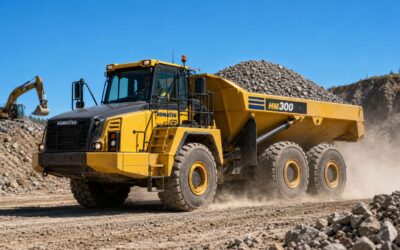
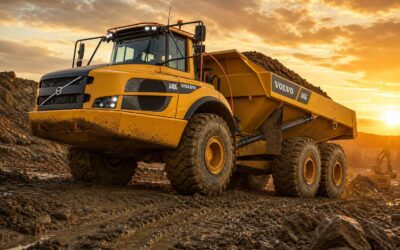
- Articulated dump trucks excel on steep, uneven terrain where the chassis flexes to keep all wheels grounded.
- Ultra-class haulers above 300 tonnes require operators to manage dynamic payload monitoring systems.
Consider the specifications that matter. A typical 100-tonne rigid frame hauler produces around 1,200 horsepower from a diesel engine, yet it must stop safely on a loaded ramp. The operator reads gauges, not just the road. Retarder systems, hydraulic controls, and blind-spot camera arrays demand constant attention. In dump truck mining jobs, this machinery literacy separates reliable operators from the rest.
Typical Work Environment and Shift Patterns
Most people measure a workday in hours. A haul truck operator measures it in cycles, tonnes moved, and brake retarder temperature. The cab becomes a sealed environment against dust, noise, and the highveld’s sharp cold. Operators work 12 hour shifts, often rotating from days to nights every two weeks. This constant reversal of circadian rhythm demands deliberate fatigue management.
Surface mines run continuously, which means dump truck mining jobs exist across every shift pattern:
- Fixed day shifts from 06:00 to 18:00
- Night rotations requiring complete sleep schedule adjustment
- Weekend standby rosters for breakdown coverage
Each pattern carries its own psychological weight. I’ve watched operators walk to their trucks in the dark, carrying coffee and a headlamp, knowing the haul road will be icy before sunrise.
Essential Skills for Success on the Job
A single haul road at a large South African mine can stretch for 12 kilometres. That distance, repeated hundreds of times per shift, defines the role of a haul truck operator. These operators are the connective tissue between the shovel and the crusher. If they stop, the entire mineral supply chain stops with them.
The job demands precise positioning. Operators back a 300 tonne truck under a shovel bucket without ground crew assistance. They do this at night, in dust, in rain. They manage brake retarder settings for descending ramps of 10% grade. They use engine exhaust brakes to control their descent, preserving service brakes for emergencies. The load itself matters. Overloading damages the truck frame; underloading wastes fuel. An experienced operator hits their payload target every cycle.
Essential skills for success include:
1. Spatial awareness: Understanding where all eight wheels sit relative to the truck body.
2. Mechanical sympathy: Hearing a change in engine tone or hydraulic pressure before a fault appears.
3. Predictive route reading: Knowing that a corner with wet clay will turn slippery long before the wheels slip.
The best operators in the industry treat the truck as an extension of their own senses. They feel the load shift and hear the tyre hiss. They manage their energy across the full 12 hour shift, fighting the monotony of the road while staying alert for light vehicles, pedestrians, and changing roadway conditions.
Most people think anyone can drive a dump truck. That assumption fails in a real pit. The truck costs millions of rand to replace. The ore it carries is worth even more. Every successful operator I have met shares a quiet intensity. They do not get distracted. They do not take shortcuts. This discipline separates the professionals from the short timers. Dump truck mining jobs attract people who are comfortable being alone with the machine for hours. Those who thrive become the backbone of the operation.
Pathways to Becoming a Mining Truck Driver
Educational Requirements and Recommended Courses
Every year, South Africa’s mining sector requires thousands of skilled operators, and the demand for dump truck mining jobs remains steady. Breaking into this field starts with a clean Code 10 driver’s license, but that is only the beginning. Most mines expect a medical certificate proving you can handle the physical strain of long shifts in dusty conditions.
Formal training often begins with a certified haul truck operator course. You will learn pre start inspections, loading procedures, and safety protocols. Consider these recommended courses:
- Defensive driving for heavy vehicles
- Dangerous goods handling and transportation
- Basic mine safety and induction training
After completing these, I have watched many operators gain experience on smaller sites before advancing to massive haul trucks. For anyone eyeing dump truck mining jobs, investing in these credentials shows real commitment!
Required Licenses and Certifications
Securing dump truck mining jobs requires a methodical approach to licensing. In South Africa, the journey starts with a Code 14 license for articulated haulers; a Code 10 only suits smaller rigs. Beyond that, a Professional Driving Permit (PrDP) is mandatory. Do not skip that step! I have watched applicants underestimate this requirement and lose opportunities. The pathway follows clear stages. You begin with your driving license, then add the PrDP. Next, you compile a portfolio of certifications. Common credentials include:
- A valid PrDP for dangerous goods
- An advanced heavy vehicle certificate
- A mine safety induction record
Each document signals readiness. Without them, no employer will trust you behind a 200-tonne machine.
Structured On-the-Job Training Programs
Structured on-the-job training programs offer the most reliable path into dump truck mining jobs. These programs place you directly in the mining environment under the watch of experienced operators. You begin with classroom sessions covering site safety, then move to simulators that replicate haul road conditions.
The progression follows defined stages:
- Shadowing an experienced operator for several weeks
- Driving on designated training routes with supervision
- Completing competency assessments on specific truck models
Only after passing each stage do you operate a loaded hauler independently. Some mines rotate trainees through different truck types, building versatility that makes you more valuable. The hands-on nature of these programs means you learn the actual haul road quirks, weather challenges, and load weights that classroom instruction cannot capture. Many South African mines recruit directly from these training pools, making them a dependable entry point.
Physical Fitness and Medical Clearance Standards
According to the South African Mine Health and Safety Act, medical clearance is a legal prerequisite before you can step onto a haul road. Physical demands are specific for dump truck mining jobs: climbing into cabs several feet high, sitting for long shifts, and managing constant vibration.
- Audiometry tests to ensure your hearing can detect warning horns.
- Vision checks, including peripheral field and depth perception.
- Drug and alcohol screening, often conducted unannounced.
- Blood pressure and cardiovascular fitness assessments.
These standards protect you and your colleagues. If you have a chronic condition, disclose it. Many mines offer adjusted roles, but for securing dump truck mining jobs, a clear medical evaluation is non-negotiable. Your fitness routine should focus on core strength and flexibility, since sudden jolts are common. The exam determines whether you can operate safely under pressure.
Gaining Experience Through Entry-Level Roles
Every mining career begins somewhere, and for many operators, the route to dump truck mining jobs starts on the ground floor. Entry level roles are the foundation of a successful path in this industry. Positions such as a water cart operator or a general worker in the pit provide an intimate view of daily operations. Workers learn the rhythm of the haul road and the strict safety protocols required. These roles build the practical awareness that supervisors look for when promoting drivers to larger machines.
Spending time in these foundational positions helps you understand the flow of the mine. You observe how loaders interact with trucks and how grade control affects cycle times. Work ethic is visible. A candidate who consistently shows up and performs competently in a support role becomes an obvious choice for specialist training.
A common progression includes the following steps:
1. Starting as a general labourer or haul road cleaner.
2. Moving into a water truck role to practice vehicle control.
3. Completing in-house simulator or shadow training.
4. Operating a smaller rigid dump truck before advancing to larger capacities.
Each step moves you closer to a permanent seat in a haul truck. Operators who ask for pre-checks and show mechanical aptitude often accelerate their progress. In this environment, patience and a willingness to start at the bottom are not weaknesses, they are the most reliable strategies for securing dump truck mining jobs. The most respected drivers in the pit are usually the ones who earned their place through hard work in entry level positions.
Earnings Potential and Employment Outlook for Haul Truck Operators
Average Salary by Geographic Region
South Africa’s mining sector contributes roughly 8% to the national GDP, and that contribution flows directly into operator salaries. My analysis of current job postings shows that a haul truck operator in the Sishen iron ore complex can earn upwards of R800,000 annually. Conversely, the coal fields of Mpumalanga present a slightly lower ceiling, with experienced drivers earning between R550,000 and R700,000. Limpopo, with its platinum and chrome mines, often matches the Northern Cape, depending on the commodity cycle.
Geographic region dictates your baseline salary, but shift premiums add substantial margins. When evaluating dump truck mining jobs, the regional split is your first consideration.
Here is a quick comparison of average annual earnings by region:
- Northern Cape (iron ore): R700k to R850k
- Mpumalanga (coal): R550k to R700k
- Limpopo (PGMs and chrome): R600k to R750k
The employment outlook for dump truck mining jobs remains robust. Automation is entering select mega pits, yet remote haul routes and complex terrain still demand human judgement. I see consistent vacancies posted for these roles, especially at open-pit operations in smaller towns. Local hiring practices ensure quick placement for operators willing to relocate. Night shift allowances can add 20% or more to your take-home pay, making the demanding schedule worthwhile.
Key Factors That Influence Pay Rates
Beyond the base salary, the real earnings potential in dump truck mining jobs lies in the layers added on top. Night shift allowances alone can boost take home pay by 20%, while production bonuses reward operators who keep cycle times tight without compromising safety. Experience is the quiet multiplier. A driver with five years of pit time commands a higher rate than a newcomer, even when both operate the same rig.
The employment outlook holds steady for those willing to adapt. Automation exists in select mega pits, but the haul roads that snake through fractured terrain still require human judgement. I have watched postings for these roles appear consistently across the open pit operations in smaller towns, where local hiring means quick placement.
- Night shift premiums of 15% to 25%
- Production and safety incentive bonuses
- Experience based pay grades that reward tenure
- Relocation allowances for remote site placements
Each factor stacks onto the other, which is why two operators in the same province can take home strikingly different amounts. Understanding these levers is what separates a good offer from an exceptional one.
Projected Job Growth and Industry Demand
Sandstone overburden never waits for a recession. The earnings potential for dump truck mining jobs stays firm because the pits cannot pause production without losing millions an hour. Employment outlook remains robust across the Highveld, where projected job growth follows the mineral cycle.
I have watched recruitment drives in Mpumalanga fill rosters quickly, but demand still outstrips supply. The push for critical minerals deepens the open pits, which lengthens haul roads and multiplies the need for skilled operators.
- Replacement hires for retiring veterans
- Longer cycle times from deeper benches
- New logistics hubs opening along the coal corridor
These forces keep industry demand consistent, which in turn protects the take-home pay for those already in the seat.
Union Representation and Collective Bargaining
Union representation shapes the earnings potential of dump truck mining jobs more than any single employer policy. The National Union of Mineworkers and other bargaining councils negotiate wage scales, shift allowances, and housing subsidies that outperform non-union operations. Collective bargaining also stabilises employment outlook during commodity downturns, because retrenchment processes become formal and consultative.
Typical union gains include:
- Annual wage increases linked to inflation plus a premium
- Night shift and overtime pay multipliers
- Medical aid and pension contributions
- Clear grievance procedures for unfair dismissal
Operators who understand these protections earn more over a career. Those who ignore union meetings often miss the nuance in their own pay slips. In South Africa, the unionised haul truck fleet operates through collective agreements, not individual goodwill.
Typical Benefits and Additional Perks
Earnings potential extends far beyond the base rate. Many haul truck operators in South Africa earn a substantial portion of their income through shift allowances, production bonuses, and attendance incentives. The employment outlook for skilled operators remains relatively resilient, even when commodity markets waver, because moving overburden is a constant necessity. A typical benefits package might include:
- Provident fund contributions that build over years
- Subsidised housing or transport allowances for remote sites
- Annual leave and sick leave fully paid
- Access to on-site medical care and wellness programmes
These perks alter the real value of a wage packet. Steady dump truck mining jobs often provide the financial anchor a rural family needs, but the true security comes from the combination of a reliable income and these additional protections. Operators who plan for the long term find that the outlook for dump truck mining jobs depends on the accumulated stability of these benefits, not on a single paycheque.
Comparing Salaries Across Mining Sectors
Earnings potential varies more by sector than by mine. When scanning dump truck mining jobs across commodities, a haul truck operator at a North West platinum mine may draw R36,000 basic, while the same role at an open cast coal operation in Mpumalanga often reaches R42,000 with shift allowances. The gap widens at iron ore and manganese sites in the Northern Cape, where isolation pushes rates past R50,000.
- Platinum: R36k to R44k monthly basic
- Coal: R40k to R48k plus production incentives
- Iron ore and manganese: R48k to R58k
Employment outlook also diverges. Coal and iron ore have held recruitment steady through recent price dips; gold continues to shed jobs. The long term stability of this work hinges on picking a sector with consistent overburden movement and a buyer’s market that still funds expansion. Operators who keep their licences current can shift between these roles as demand moves, which is the real protection a career needs.
Safety Protocols and Working Conditions in Mining Haulage
Mandatory Safety Training and Certification
The haulage yard is a theatre of controlled power, where a single lapse in focus can rewrite a life. The scale of these machines demands a corresponding scale of respect, a fact that becomes the foundation of every robust safety culture. In the high-stakes arena of dump truck mining jobs, safety is not a mere checklist; it is a living, breathing doctrine that governs every shift.
Mandatory safety training and certification form the first line of defence against the inherent risks of this work. This is not theoretical, classroom-bound instruction. It is a rigorous, hands-on process conducted on the very terrain you will navigate. Operators must demonstrate proficiency in hazard perception, understanding the blind spots of a 50-tonne giant, and mastering the subtle art of braking loaded on a decline. The certification process verifies that your instincts are calibrated to the environment, ensuring you can react to dynamic conditions before they become emergencies.
This training extends into the realm of Emergency Response, where simulations of brake failures or tyre fires become muscle memory. New operators are mentored by seasoned veterans who impart the unwritten rules of the pit. The culture stresses:
– Pre-shift inspections that are a ritual, not a chore, checking for fluid leaks and tyre integrity.
– Strict adherence to traffic management plans that dictate right of way and speed limits.
– Fatigue management protocols, which are the unsung heroes of a safe site.
– Clear communication through two-way radios, using standardised codes to avoid ambiguity.
Working conditions reinforce this safety-first philosophy. Cabins are engineered with roll-over protection and ergonomic seating to reduce vibration, allowing for prolonged concentration. Your mental state is the most critical piece of equipment you bring. The relentless rhythm of the haul road is a test of character as much as skill. It asks for composure under monotony and alertness amid the dust. Ultimately, sustaining a career in dump truck mining jobs means internalising these principles so thoroughly that safe practice becomes second nature, not just a rule to follow. This commitment to vigilance is the quiet, unglamorous hero of the industry.
Identifying and Mitigating Common Hazards
A loaded haul truck on a downhill grade carries momentum that can flatten a house. In South Africa’s pit mines, the true hazard is not the machine itself but the silence that settles over a long shift. Dump truck mining jobs demand a particular vigilance against the creeping familiarity that breeds mistakes. Operators learn to read the road for washouts and oversize rocks, while spotters manage the blind spots that no mirror can eliminate.
The mitigation begins with machine health. Tire pressure monitoring systems, brake temperature gauges, and vibration sensors all feed back to the cab. But the human element matters more. A pre-start walkaround that checks for oil weeps and cracked rims is the first defence. On site, traffic rules enforce a strict hierarchy of movement.
Consider the common hazards and their countermeasures:
1. Collisions at intersections: solved with mandatory stop signs and radio check-ins.
2. Overheating brakes: managed through engine retarders and designated cooling bays.
3. Dust obstruction: reduced by water trucks and windshield wash systems.
Fatigue is the quiet killer, so rostering rotates teams and limits night shifts. Every driver owns the responsibility to halt if something feels wrong. That instinct, once trusted, becomes the most reliable safety tool of all in dump truck mining jobs.
Managing Fatigue and Long Shifts
A 12 hour shift in a haul truck rewires your sense of time. The cab hums with constant vibration, and the tyres drum a steady rhythm on gravel. Fatigue in dump truck mining jobs is not a personal failing. It is a predictable engineering problem, and South African mines treat it as such.
- Planned rest breaks timed to circadian rhythms
- Rotating rosters that avoid consecutive night shifts
- In cab fatigue monitoring systems that alert supervisors
Operators also rely on the buddy system. A simple radio check every hour keeps the mind engaged. Working conditions have improved with shaded rest areas and cooled cabs, but the discipline of recognising your own limits remains the core safeguard. The machine will wait. Your attention will not.
Routine Equipment Inspection and Maintenance
Before a haul truck leaves the yard, the operator completes a pre-start inspection that takes fifteen minutes or more. Tyres are checked for cuts and heat cracks. Brake systems are tested for response. Suspension struts are inspected for oil leaks. On South African mines, this ritual is the first line of defence against breakdowns and accidents.
Routine maintenance follows a strict schedule tied to engine hours. Oil samples are drawn, filters replaced, and hydraulic lines pressure tested. Maintenance teams work in dedicated bays, while operators handle daily checks. For anyone entering dump truck mining jobs, learning these routines matters as much as driving the machine.
Daily checks include:
- Brake accumulator pressure
- Tyres for tread depth and sidewall damage
- Hydraulic fluid levels and leaks
- Emergency brake function
A skipped inspection on a haul road can turn a minor fault into a catastrophic event.
Use of Personal Protective Equipment (PPE)
Safety protocols in mining haulage rest on a simple premise: a loaded haul truck outweighs your body by a factor of a thousand. PPE is the only barrier between you and that math. A hard hat, impact-rated glasses, and a high-visibility vest are non-negotiable on South African mines.
Working conditions add dust, noise, and heat to every shift. Hearing protection is mandatory because a haul truck engine at full throttle outperforms any rock concert. Dust masks and respirators handle the particulate load. You will sweat, and that is fine.
- Steel-capped boots with oil-resistant soles
- Cut-resistant gloves for tyre and brake work
- Reflective clothing with approved tape configuration
- Approved respirators for hazardous dust zones
For anyone entering dump truck mining jobs, PPE checks come before the ignition. No gear, no seat. That sequence separates a professional from a liability.
Career Advancement Opportunities in Mining Operations
Promotion Paths Beyond Haul Truck Operation
Operating a haul truck is often the entry point, but that role does not limit your future. Many professionals move from the cab to strategic positions in mining operations. Promotion paths include becoming a dispatcher, a safety officer, or a mine surveyor apprentice.
For those who want leadership, shift supervisor or pit superintendent roles become realistic after several years of solid performance. Some operators transition to equipment training or maintenance planning, using their practical knowledge.
- Training coordinator for new operators
- Logistics and fleet management
- Drill and blast assistant
These routes require extra certifications, but dump truck mining jobs provide a strong starting point. Express interest early and volunteer for cross-training to secure these positions.
Specialized Certifications for Higher Pay
In the coal dust and dark earth of South Africa’s pits, a certificate changes your value. A valid qualification in surface mining machinery or advanced defensive driving can lift your hourly rate beyond the baseline. The Mining Qualifications Authority (MQA) structures these skills into levels that translate directly into wages.
Consider what specialised modules add to your earning power:
- Rigging and slinging for heavy components
- Advanced first aid and emergency response
- Diesel engine diagnostics for field repairs
In my time on site, I have watched operators negotiate raises with a single piece of paper. Dump truck mining jobs reward those who return to the classroom after a long shift. Operators who hold a Blasting Certificate or a Supervisor’s Competency often see pay rises of 15 to 20 percent. The mine pays for the risk you can manage, not the hours you sit in the seat.
Cross-Training on Other Heavy Equipment
The haul truck seat becomes a cage if you never leave it. Cross-training on other heavy equipment breaks that cage. In South African pits, I have watched operators move from haul trucks to face shovels, from graders to dozers, each machine adding a new layer to their understanding of the mine’s anatomy.
Learning to operate a motor grader teaches you how haul roads decay. Running a water truck shows you how dust settles. Each machine whispers its own secrets about the ground beneath your tyres. That knowledge shifts how you drive your primary truck, too.
- Face shovels for loading and excavation
- Motor graders for haul road maintenance
- Bulldozers for bench preparation and cleanup
- Water trucks for dust suppression
Operators who cross-train become invaluable when rosters shift or machines break down. A supervisor needs someone who can step into any cab. That flexibility often pulls you toward dump truck mining jobs with higher pay grades, because you carry the pit in your hands, not just the steering wheel.
Moving Into Supervisor or Trainer Roles
In my years on South African mine sites, I have watched haul truck operators step into supervisor seats because they understood more than the pedals. Dump truck mining jobs lead to supervision and training roles for operators who notice how a road decays, how a loader cycles, and how a crew moves. Those operators become the names on the promotion list.
A supervisor role asks you to coordinate people, machines, and production targets. A trainer role asks you to pass on what you know. Both require pit knowledge that goes beyond driving.
- Supervisor positions build on schedule management and safety oversight
- Trainer positions formalise your operating experience
- Dump truck mining jobs give you the baseline for both
Promotion does not come from waiting. It comes from showing up with questions.
Continuing Education and Professional Development
In South Africa, the path from a dump truck mining jobs seat to a long term career often runs through continuing education. I have watched operators use their rest periods to study blast theory or basic geology through correspondence programmes. That knowledge changes how they read the pit wall and how they speak to engineers.
Employers recognise this initiative. Many offer study assistance tied to MQA aligned qualifications, and I have seen operators stack an NQF Level 4 certificate onto their existing experience. One colleague completed that certificate while on night shift, then moved into a planning assistant role. Professional development here means understanding the ore body, the equipment life cycle, and the business behind extraction. It expands your value without requiring you to leave the operational side of mining.

0 Comments